
The Short Courses will be given by internationally renowned scientists in the electromagnetics and antennas & propagation community.
All the short courses will be held in Conference Room, 2F, Toyama International Conference Center.
The participants who have paid the registration fees are invited to join the short courses by free of additional charges.
Please register in advance by sending an email to:
ICEAA-IEEE APWC 2026 Conference Secretariat [email protected]
Subject: short-course registration – specify the course/courses
Now-a-days antennas have become an integral and important part of almost any wireless communication system. In the field of antenna engineering, theoretical analysis is of paramount importance in understanding the basics of the antenna radiation characteristics. While the basic concept of antennas is well known, closed form, exact analytical solutions to many antenna problems are not practical and impossible in many cases.
Advances in electromagnetic (EM) simulations have significantly impacted the antenna design process by providing exact solutions by solving Maxwell’s equations using numerical methods. It is a common practice now in academia and industry to use various commercially available EM simulation tools for antenna design process. In this short course, we will introduce basics of antenna modeling and simulation process with pros and cons of various numerical methods, such as Method of Moments (MoM), Multilevel Fast Multipole Method (MLFMM), Finite Element Method (FEM), Finite Difference Time Domain (FDTD), Physical Optics (PO), Ray Lunching Geometrical Optics (RL-GO), and Uniform Theory of Diffraction (UTD).
We will then discuss modeling and simulation of various antenna types, starting from simple configurations such as dipoles and loops and eventually leading to more complicated and practical designs such as microstrip patches and high-gain reflector antennas.
Dr. C.J. Reddy is Siemens Fellow at Siemens Digital Industries Software. Dr. Reddy was awarded the Natural Sciences and Engineering Research Council (NSERC) of Canada Visiting Fellowship to work at Communications Research Center in Ottawa during 1991-1993 and was awarded the US National Research Council (NRC) Resident Research Associateship in 1993 to work at NASA Langley Research Center in Hampton, Virginia.
While conducting research at NASA Langley, he developed various computational codes for electromagnetics and received a Certificate of Recognition from NASA for development of a hybrid Finite Element Method/Method of Moments/Geometrical Theory of Diffraction code for cavity backed aperture antenna analysis. He also worked as Research Professor at Hampton University from 1995 to 2000.
Dr. Reddy was the President of Applied EM, Inc (2000-2017) where he led several Phase I and Phase II SBIR projects for the DoD and NASA.
He was also the President of EM Software & Systems (USA) Inc (2002-2014) and led the marketing of the EM Simulation tool, Feko in North America. EM Software & Systems (USA) Inc was acquired by Altair in 2014.
Dr. Reddy served as the Vice President of Business Development (Electromagnetics)-Americas, at Altair. Siemens acquired Altair in 2025.
Dr. Reddy is a Fellow of IEEE, Fellow of ACES (Applied Computational Electromagnetics Society) and a Fellow of AMTA (Antenna Measurement Techniques Association). Dr. Reddy is a co-author of the book, “Antenna Analysis and Design Using FEKO Electromagnetic Simulation Software,” published in June 2014 by SciTech Publishing (now part of IET).
Dr. Reddy is elected as a member of AMTA Board of Directors for a three-year term starting Jan 2020 and served as the Technical Coordinator for AMTA 2020 and AMTA 2021 Conferences as well as the President in 2022 as well as the immediate Past President of AMTA in 2023.
Dr. Reddy is also serving on the ACES Board of Directors for the term 2023-2026 and served as the Vice President of ACES. Dr. Reddy served as an Associate Editor for IEEE Open Journal of Antennas of Propagation and IEEE Transactions on Antennas and Propagation. He served as the Chair of IEEE Antennas and Propagation Society (AP-S) Young Professionals Committee during 2021-2024 and served on the AP-S AdCom during 2023-2024.
Dr. Reddy is appointed to IEEE Fellows Committee by IEEE Board of Directors for the terms 2020-2021 and 2022-2023. Currently, Dr. Reddy is serving as the 2026 IEEE AP-S President.
Dr. Reddy is inducted into IEEE Heritage Circle by the IEEE Foundation for establishing the “IEEE AP-S CJ Reddy Travel Grant for Graduate Students.”
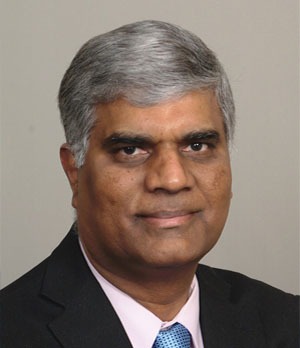
Fellow IEEE
Fellow, Siemens, USA
2026 IEEE AP-S President
In the history of Antenna Engineering, there has been only one universal method to steer the beam of any fixed-beam antenna. That’s physically tilting the antenna. This method has been implemented in many commercial antenna systems using motorised mechanical tilting and rotating systems. Now there is another way: Near-Field Meta-Steering, in which two flat phase-gradient metasurfaces (MS) are placed very close to the fixed-beam “base” antenna, in its near field, and are rotated independently. This way, the beam of the antenna can be steered over a large range of zenith angles and the complete azimuth range of 3600, without tilting or rotating the antenna. In fact, no part of the system is tilted.
A Meta-Steering antenna system is only slightly taller than the base antenna itself. Lack of tilting means it is much shorter than conventional tilting antennas. In the future, one electronically reconfigurable near-field metasurface may provide 2D beam steering without any mechanical rotation.
Since this method was introduced in the seminal paper in 2017, together with the concept of Near-Field Phase Transformation, it has been applied by many industry and academic researchers across the globe (e.g. Thales in France, WaveUp in Italy, TICRA in Denmark, UCLA, University of Wisconsin-Madison, San Diego State University, all in USA) to develop novel antenna systems, and to steer the beam of nearly all types of fixed-beam antennas, e.g. Fabry-Perot/resonant cavity antennas, reflector (dish) antennas, metasurface antennas, slot arrays, holographic antennas, and even some end-fire antennas, to name a few.
The method is also known in several names including Risley Prism Method and Near-Field Phase Transformation. The surfaces are also known in different names, e.g. meta lenses, flat lenses, transmitarrays, deflectors.
Several different types of metasurfaces have been developed, e.g. standard printed-circuit-board type, all dielectric, all metal, hybrid and 3D-printed, and some research outcomes have led to national prizes and awards. This short course will review the research conducted by the instructor’s team as well as others in this modern and growing area of research, provide an insight into the concept of Meta-Steering, and describe some ways of reducing metasurface development efforts.
The short course attendees are expected to have a basic understanding of antennas and electromagnetics but does not require expertise in these fields. It is suitable for PhD/master’s students, postdoctoral researchers, industry engineers and academics.
Karu Esselle, FRSN, FIEEE, FIEAust, is Distinguished Professor in Electromagnetic and Antenna Engineering at University of Technology Sydney. A large collection of awards Karu recently received include Academic Research Team of the Year (Team Leader) at 2025 Australian Space Awards, 2024 Premier’s Prize for Leadership in Innovation in New South Wales, Australia’s national 2023 Eureka Prize for Outstanding Science in Safeguarding Australia (Team Leader), Australia’s national 2022 Professional Engineer of the Year, both the most prestigious space award in Australia – the “Winner of Winners” Excellence Award – as well as the Academic of Year Award at the 2022 Australian Space Awards, 2022 UTS Chancellor’s Medal, both the Excellence Award and the Academic of the Year Award at 2021 Australian Defence Industry Awards, and 2019 Motohisa Kanda Award (from IEEE USA) for the most cited paper in IEEE Transactions on EMC in the past five years.
Karu is a Fellow of the Royal Society of New South Wales, IEEE and Engineers Australia. He has authored over 750 research publications, and his papers have been cited over 18,000 times. His h-index is 66. Karu is among the top 0.3% of active researchers in the world in the research area of Networking and Telecommunications, according to an analysis published in Elsevier, which considered only actively publishing researchers in this field.
Since 2002, his research income is over 35 million dollars. Karu has provided expert assistance to more than a dozen companies in USA, Europe and Australia. Among Karu’s many invited presentations are keynote speeches at 2026 IEEE IMWS-AMP, 2026 IEEE LACAP, 2025 IEEE MAPCON and 2024 IEEE CAMA. He was appointed as a Distinguished Lecturer of IEEE AP Society in 2017 and has given 68 distinguished lectures in 23 countries around the world.
At present, Karu is the Representative of the IEEE Antennas & Propagation Society (AP-S) for all Asia-Pacific countries excluding China and India. From 2018 to 2020, Karu chaired the prestigious Distinguished Lecturer Program Committee of the IEEE AP-S for 3+ years. He has served or is serving in 8 global committees of this IEEE society, including AdCom and Awards. In addition, Karu has been a Senior Editor of IEEE Access and has served as an Associate Editor for nearly all major journals in his fields including IEEE Transactions on Antennas Propagation, IEEE Antennas and Propagation Magazine, IEEE Access and IET MAP. He is a Director of Innovations for Humanity Pty Ltd.
Karu was in the College of Expert Reviewers of the European Science Foundation. He has been invited to serve as an international expert/research grant assessor by many research funding bodies around the globe, and as an Assessor for professorial promotions by prestigious universities.
Previously Karu was a Director of WiMed Research Centre and Associate Dean – Higher Degree Research (HDR) at Macquarie University. He has also served as a member of the Dean’s Advisory Council and the Division Executive. Karu is also the Chair of the Board of management of Australian Antenna Measurement Facility, and was the elected Chair of both IEEE New South Wales (NSW), and IEEE NSW AP/MTT Chapter, in 2016 and 2017.
His research activities are posted in the web at https://www.uts.edu.au/staff/karu.esselle and https://en.wikipedia.org/wiki/Karu_Esselle

Distinguished Professor in Electromagnetic and Antenna Engineering at University of Technology Sydney
Duration: 3 hours
Quantum technologies are increasingly influencing how electromagnetic systems are modelled, controlled and designed, from qubit devices and quantum sensors to programmable environments, wave-based computation and quantum-assisted optimisation. This short expert course introduces the emerging field of quantum electromagnetics from the perspective of applied electromagnetics, antenna theory, propagation, wave physics and computational modelling.
The course begins with a compact introduction to the quantum-mechanical principles most relevant to electromagnetics: states, observables, superposition, entanglement, measurement, open systems and dissipation. These concepts are then connected to electromagnetic wave phenomena through analogies with quantum evolution, modal expansions, scattering and resonances in both random media and coupled cavities. Particular attention is given to how qubits and quantum devices can be described using electromagnetic models, including circuit-QED, cavity-QED, radiative coupling, decoherence, noise and environmental interactions.
The course will then discuss the physical meaning of entanglement and its relevance to emerging applications in communication and sensing. Examples will include quantum-secure communications, quantum key distribution, quantum radar and quantum sensing, where non-classical correlations provide new ways of thinking about security, detection, information transfer and measurement under noise and uncertainty.
Quantum-mechanical effects with useful electromagnetic counterparts will also be introduced. One example is quantum tunnelling, which can be related to evanescent waves, sub-cutoff propagation, near-field coupling and the geometrical structure of wave information. This connection offers a bridge between quantum intuition and electromagnetic information theory, especially in understanding how spatial information is stored, transported, attenuated or recovered by wave fields.
The final part of the course will introduce quantum-assisted electromagnetic design, including quantum-inspired optimisation, hybrid quantum–classical frameworks and their possible use in large, complex, stochastic or reconfigurable electromagnetic systems.
The emphasis throughout the course will be on physical insight, modelling principles and emerging opportunities. The course is intended for researchers and engineers in antennas, propagation, scattering, computational electromagnetics, metamaterials and wireless systems who wish to understand how quantum concepts can enrich electromagnetic modelling and future design methodologies. No prior expertise in quantum computing is assumed.
Gabriele Gradoni earned his Ph.D. in electromagnetics from Università Politecnica delle Marche, Ancona, Italy, in 2010. He was a Visiting Researcher with the Time, Quantum, and Electromagnetics Team at the National Physical Laboratory, Teddington, U.K., in 2008. In the period from 2010 to 2013 he was a Research Associate at the Institute for Research in Electronics and Applied Physics, University of Maryland, College Park, MD, USA. From 2013 to 2016, he was a Research Fellow at the School of Mathematical Sciences, University of Nottingham, U.K., where he became a Full Professor of Applied Mathematics and Electromagnetics Engineering in 2023.
From May 2023, he has been a Full Professor and Chair of Wireless Communications at the 6G Innovation Centre, Institute for Communication Systems, University of Surrey, Guildford, U.K. In Surrey, he leads the work area on Quantum Electromagnetics Theory and Practice. He was a Royal Society Industry Fellow from 2020 to 2024 at British Telecom, U.K. Since December 2022, he has held positions as a Visiting Fellow at the Department of Computer Science and Technology, University of Cambridge, U.K., and as an Adjunct Professor at the Department of Electrical and Computer Engineering, University of Illinois at Urbana–Champaign, USA. His research spans probabilistic and asymptotic methods for wave propagation in complex systems, metasurface modelling, wave chaos, and quantum computational electromagnetics, with applications in electromagnetic compatibility and modern wireless communication systems.
Prof. Gradoni is a member of the IEEE, URSI, and the Italian Electromagnetics Society. His work has been recognized with several international awards, including the URSI Commission B. Young Scientist Award in 2010 and 2016, the Italian Electromagnetics Society Gaetano Latmiral Prize in 2015, and an Honourable Mention for the IEEE TEMC Richard B. Schulz Transactions Prize Paper Award in 2020. Furthermore, he received multiple Best Paper awards at international conferences, including the Best Electromagnetics Award at EuCAP 2022.
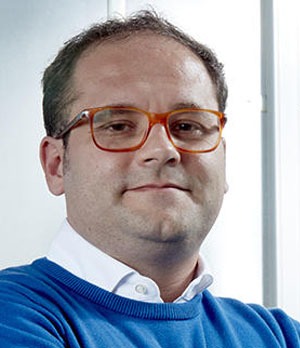
Full Professor and Chair of Wireless Communications,
6G Innovation Centre, Institute for Communication Systems, University of Surrey, Guildford, UK