
Makoto Ando, Jiro Hirokawa, and Kei Sakaguchi
Institute of Science Tokyo (formerly Tokyo Institute of Technology)
In 5G and beyond, millimeter and even terahertz frequency will be utilized in wireless systems. The planar arrays are promising for enhanced wireless systems in these bands.
The first part of this talk reviews high gain and high efficiency waveguide arrays developed by the authors. Simple, cost-effective, lightweight and passive planar antennas were pioneered in single-layer traveling wave arrays for the civil use. Typical and initial use cases for higher gain have been, DBS reception, fixed wireless access (FWA), on-board antennas for SAR imaging and planetary exploration. Then wider bandwidth request beyond 5G stimulated the design of multi-layer cooporate-feed waveguide arrays.
The second part introduces various PoC demonstration of networks in 5G and beyond utilizing millimeterwave arrays. These include the mobile networks with the Compact range and High-Rate Close Proximity (HRCP) communications dispensing with beam scanning of arrays, while repeater technologies for enhancing the millimeterwave coverage are tested. XGMF Japan activities for 5G and beyond are also mentioned.
For 5G and beyond, aforementioned achievements will contribute to the design of the heterogeneous networking utilizing millimeter wave; these passive arrays would be enhanced active functions such as beam scanning, power combining and signal processing capability such as MIMO and AI support, for compensating the difficulties of higher frequencies in communication networks.
Makoto Ando received his doctorate of engineering in electrical engineering from Tokyo Institute of Technology in 1979. He subsequently joined NTT and was engaged in the development of antennas for satellite communication. He moved to Tokyo Institute of Technology in 1982 and served as a Professor and 2015-2018 Executive Vice President for Research. In 2018, he moved to National Institute of Technology (KOSEN) and served as the senior executive director. Now he is the outside director of KDDI Corp.
His main interests have been field and waves in radio science, especially high frequency diffraction theory, the design of waveguide planar arrays, and millimeter-wave antennas for future wireless communication. He plays a leading role in the promotion of a wide range of applications of millimeter-wave wireless communications in Japan. He was the founding President of Teraherts Systems Consortium and Japan Coordinating Council for Wireless Power Transfer (JWPT). He is the Program Director of Strategic Information and Communications R&D Promotion Programme (SCOPE) and Fundamental Technologies for Sustainable Efficient Radio Wave Use R&D Project (FORWARD), both of Ministry of Internal Affairs and Communications(MIC), Japan. He is also a member of XG Mobile Communications Promotion Forum (XGMF).
His international activities have included service as 2009 president of the IEEE Antennas and Propagation Society, 2018-2019 President of The Institute of Electronics, Information and Communication Engineers (IEICE), Japan and 2017-2021 president of the International Union of Radio Science (URSI).
Professor Ando is a fellow of IEEE, URSI and IEICE.
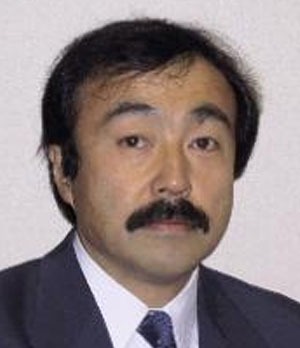
Professor emeritus, past Executive Vice President
Tokyo Institute of Technology
The World Radiocommunications Conference, WRC, is held once every four years. In the WRC 2017 several bands in the frequency range from 24 GHz to 86 GHz were identified for 5G applications with bandwidths from 1.6 GHz to 10 GHz to enable high data rate transmission with low latency. This led to the development of propagation models in various standards. Some of these bands were subsequently approved in WRC in 2019 with 14.75 GHz harmonized worldwide, ~ 85% of global harmonization.
In WRC 2023 frequency bands in the sub-THz band from 100 GHz up to 275 GHz, have been identified for 6G high data rate applications in addition to the upper 6 GHz frequency band in the range of 6.425 to 7.125 GHz. Due to the highly congested spectrum in the lower frequency bands, the upper 6 GHz band has been the subject of investigation for potential spectrum sharing between mobile and other applications such as WiFi, astronomy, Ultra-Wideband (UWB) and fixed links amongst other applications.
To update the models for the sub-THz band, several measurements were conducted in typical deployment scenarios indoor and outdoor to generate suitable propagation models in several standards which include the International Telecommunication Union, ITU, and the European Telecommunications Standards Institute, ETSI, working group on THz.
In this talk, various propagation measurements in indoor and outdoor scenarios are presented with the updated ITU models ITU-R P. 1411-13 and ITU-R P. 1238-13 across a wide frequency range and ETSI’s models which are currently under development for the sub-THz band. Effects such as human blockage investigation, the impact of precipitation on fixed links, building entry loss and clutter loss are discussed. In addition, the potential of spectrum sharing in the upper 6 GHz band for WiFi indoor and mobile outdoor is presented with the need for protection of radio astronomy.
Sana Salous joined Durham University in 2003 where she holds the Chair in Communication Engineering and is the Director of the Centre for Communication Systems.
Professor Salous radio propagation research covers HF for sky wave propagation for long range communication and UHF to the millimetre wave band for 5G and 6G mobile communications. In this area she introduced the digital frequency sweep technique for high bandwidth channel sounders for radio propagation studies. She is an active member various COST actions, a member of the UK delegation to the International Union of Telecommunications, ITU, and is currently Vice Chair of the ETSI THz working group and Vice president of URSI.
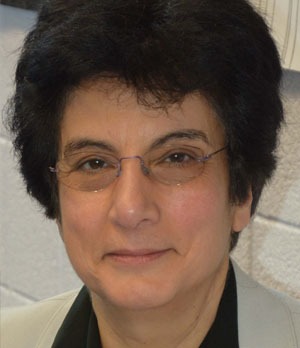
Department of Engineering,
Durham University, UK